
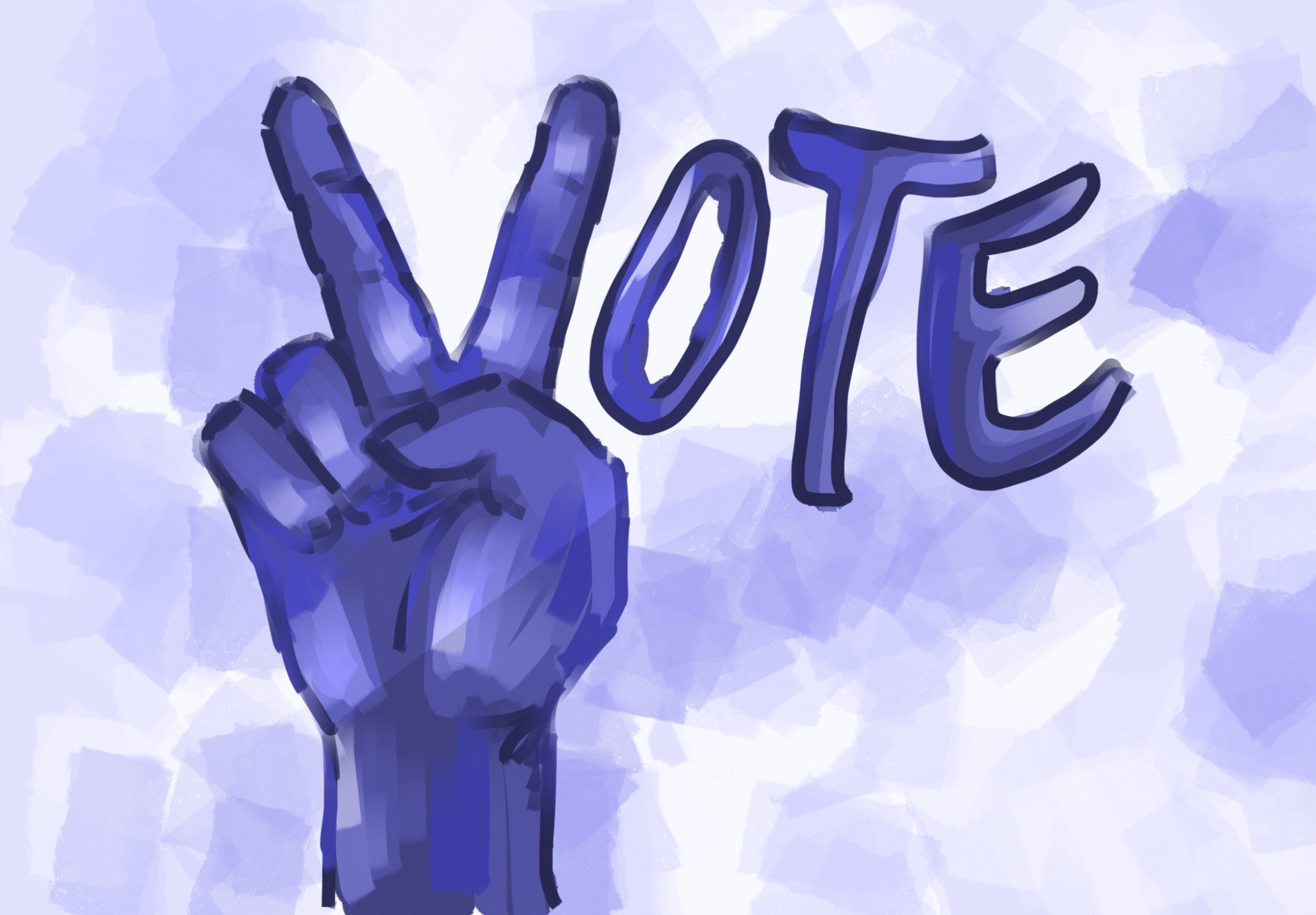
Story by Leighton Kwok
Staff Writer
Illustration by Sage Chang
Staff Illustrator
The Gen Z Vote could create a turning point in American Politics
The United States of America was built on the idea that life, liberty, and the pursuit of happiness would be easier for generations to come. The Founding Fathers established the complex US voting system so the country’s people would have a say in how their nation operated, with the voting age beginning at 21. But when President Franklin D. Roosevelt dropped the minimum military draft age from 21 to 18 in Nov. of 1942, people were outraged. Young activists believed that if they were old enough to be drafted, why were they stopped short of the ballot box? It wasn’t until 1971 that Congress created the 26th Amendment to the Constitution, granting US citizens ages 18 and up the privilege to vote in all federal, state, and local elections. Today, young voters have neglected their right to vote when their vote is most needed.
The Generation Z voting bloc, those born between 1997 and 2012, grows larger and larger each year, with the final group of Gen Z voters becoming eligible to vote in 2030. According to Tufts University, over 40 million Gen Z Americans were eligible to vote in the 2024 United States presidential election. But more than 21 million of them did not cast their ballot. That is more than 50 percent. The country’s youth went from fighting for the ability to vote to not using it when politics are overwhelming and the most heated.
Gen Z and Generation Alpha are the youngest age groups, meaning long-term issues presented in Congress today will affect them most in the future. Currently, Gen Z is directly affected by federal educational scholarships like FAFSA being cut through President Donald Trump’s One Big Beautiful Bill Act. For a generation already dealing with record tuition costs, tightening the exact aid programs that make college possible does not just make school harder to afford; it prevents students from being able to go to college at all.
Legislation decided now also affects the future job market. With Artificial Intelligence (AI) being implemented into the workforce, entry-level hiring is changing, including the exact tasks of research, drafting, and basic analysis that used to be how young workers proved themselves. Talks of regulation on AI in the workforce and how it will be used in daily life are beginning to reach the House of Representatives. Interacting and voting on propositions on these issues is how Generation Z can be involved.
Housing costs have outpaced wage growth for years, pushing homeownership further out of reach for people just starting careers. None of these are abstract, someday problems. They are the terms Gen Z is inheriting right now. Wanting different outcomes in daily life — cheaper tuition, a livable planet, an affordable place to live — starts with showing up to the one process designed to let ordinary people influence those outcomes.
A common excuse for not going to the ballot box is not having the time or the background knowledge to sort through every candidate and issue. But that is part of what political parties exist to do — they group candidates by shared priorities so voters aren’t starting from zero every election cycle. This isn’t an argument that people should vote on a party line without thinking. It’s a reminder that voting, in whatever form it takes, is a signal that someone is paying attention to the direction of their country and wants a hand in shaping it, instead of handing that responsibility to everyone else.
Voting in elections and promoting civic engagement among Generation Z is crucial, as the future that they will live in is being decided right now. Civic engagement means being informed about current legislation and calling their representatives to fight for what the current population is actually struggling with. Low turnout among young voters is not just a missed opportunity — it directly translates into the issues Gen Z cares about, from student debt to housing, getting less attention from the people writing the laws.