
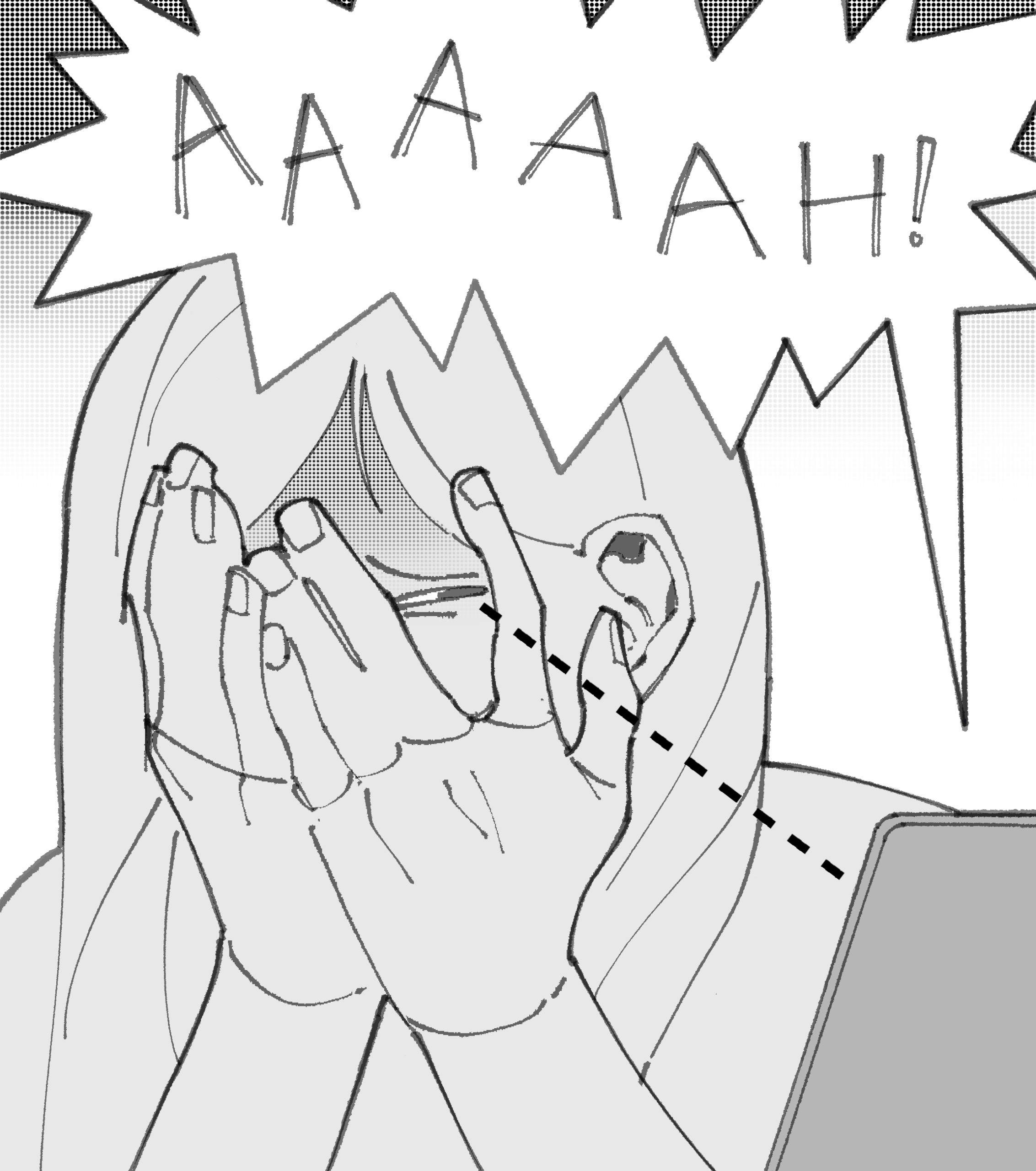
Story by Maxine Messineo
Staff Writer
Illustration by Lanah Kim
Co-Design Editor
Horror is a genre of media that is designed to evoke feelings of fear, dread, shock, disgust, and more by playing on human anxieties, such as the fear of death, the unknown, or loss of control. Despite the often negative themes and feelings that the genre elicits, it is one of the most popular genres in modern media, found in movies, books, video games and podcasts.
Most fans of horror media do not enjoy the gore or disgust-based horror that is often depicted in films, books, video games, and podcasts, according to Dr. Coltan Scrivner in an interview with Speaking of Psychology.
“I watch [horror movies] with my brother, and he’s younger than me, he’s 13. And he loves to watch really gory stuff, and a lot of the time, I have to look away and hide.” said senior Claire Heyler-Erickson.
It is more about the limitations of the body and the consequences of interacting with something dangerous or harmful, which feeds the audience’s morbid curiosity.
“I really hate gore and violence, but I love paranormal horror movies, like The Conjuring, because they’re really enticing to me. I’m more locked in when I watch horror movies than any other movie,” said Heyler-Erickson.
Morbid curiosity developed as a defense mechanism that helps people reduce uncertainty by learning about potential threats in a fictional, nonthreatening way, and is an interest in things that are potentially dangerous and involve death, violence, or bodily harm. The word morbid is specifically used to describe the object of interest and not a personal characteristic.
Some people who consume horror media feel a sense of empathy for the characters in the story, and seeing themselves in their place is one way they understand the media.
“I don’t know what word this would be, but the feeling of ‘I would hate to be in that position’. It’s just feeling almost empathy for characters in the [fictional] world,” said sophomore Gavin Fox.
People who seek out scary or dangerous activities to feel a strong rush of energy and excitement are known as adrenaline junkies and often use the genre of horror to gain that rush of adrenaline.
When people experience intense situations or experience intense emotions, epinephrine, or adrenaline, is released, causing an elevated heart rate, blood pressure, and breathing. This sensation provides someone with a feeling of being fully alive and can be achieved through watching intense, shocking horror movies.
“I think there’s just a certain thrill to [watching horror movies]. It gives you a little bit of anxiety in a good way, a little bit of a dopamine hit, and it’s enticing, you know? Most horror movies don’t bore you. There’s always something to keep you interested in [it].” said Fox, whose favorite horror movie is Obsession.
True crime is another genre that is often an outlet for audiences’ morbid curiosity. While this genre is less blunt with gore, violence, and shock, it still utilizes human fears, such as death, bodily harm, or unknown dangers.
Horror gives people a more rushed adrenaline spike or sense of fear through jump scares or shock value, as opposed to true crime, which gives a more prolonged effect; those who read, watch, or listen to it often feel scared when in similar situations, such as home alone or at night.
True crime also allows for a learning experience for the brain, which is inherently rewarding for humans. The consumer’s brain catalogs things such as: “What did the police miss in the case?” “What is the family’s or friends’ involvement and other things?”, which stimulates and rewards the brain.
Horror media often focuses its theme on real fears and anxieties that humans face day to day. Not only extremes, such as death or violence, but also everyday experiences such as high school, relationships, and fear of the unknown.
Consumers of horror media may find comfort or relatability in the genre of horror, especially when it touches on taboo or hard topics such as abusive relationships or the loss of a loved one.
“Sometimes I feel really sad when I watch horror movies, but it’s like a deep kind of sadness where I can appreciate the movie, you know? Especially if it was well written. But then at the same time, [I feel] excitement, and I just can’t look away,” said Heyler-Erickson.
Horror media is often used to scare audiences just as much as it is used to examine audiences’ deepest fears, anxieties, and curiosities. Audiences enjoy books, podcasts, games, and movies that do this because it can make them feel seen or understood as well as frightened in a safe, controlled environment.