
Story by Gavin Bartolome & Leighton Kwok
Sports Editor, Staff Writer
Illustration by Yumin Kim
Staff Illustrator
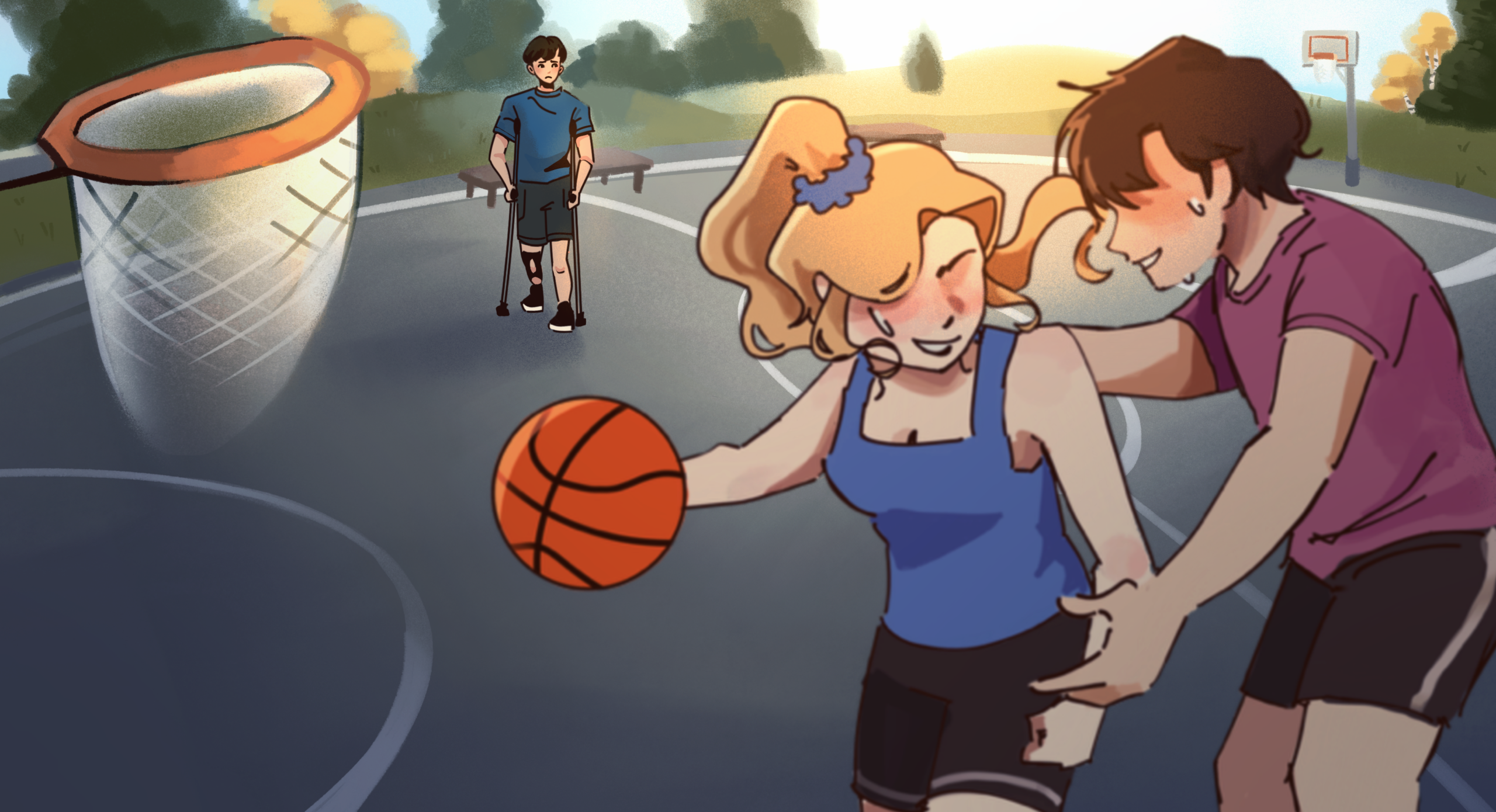
Many athletes face injuries and try to expedite their recovery at the cost of long-term healing.
ACL tears, fractures, and head traumas can be career-ending blows to an athlete’s career. While modern medicine has helped bring back many from the injured list, close to a fifth of injuries will pull an athlete from professional leagues. With new physical constraints, mental issues have been on the uprise, hurting new athletes and old.
Injuries are an athlete’s biggest fear, and when it happens, all they hope for is to get better. Immediately, concerns about well-being come into play, “Can I get better?” “Will I get better” “Is this the end?” Many enter a sense of desperation to heal, and return to their coaches better than before they got injured. They push boundaries, and try to rush the treatment process.
Junior basketball athlete Cora Kung tore her ACL her sophomore year midway through the season. When injured, she immediately got thrown into a new world of unfamiliarity and pain, having to face her sophomore year now with a limiting disability for the next nine months, and having to support her team from the sidelines.
“Fear of missing out is real, especially when you get further along but can’t really do everything” Kung said. “I’m just running in my straight lines, and it sucks just not being able to play.”
According to 2020 JOSPT Research, athletes that return to a sport before their official release date face a seven-times higher reinjury rate, with 70 percent of physical therapy patients not reaching that point.
Repeated injuries can also lead to other muscular problems down the line especially in weight-bearing joints like the knees and hips. Recurring concussions have been linked to chronic traumatic encephalopathy (CTE), a brain condition resulting in memory loss, aggression, and impaired judgment.
This not only affects students, but also professional athletes. During the 2024 Paris Olympics, out of 592 athletes part of the US team, a 100 faced at least one injury. In total, there were 172 injuries, meaning on average, more athletes faced two injuries than none.
“I don’t regret the 12 years in baseball,” Major League Baseball player Sandy Koufax said. “But I think I would regret playing one year too many.”
Brandon Roy played as the Portland Blazers’ shooting guard from 2006-2013. During his prime, Roy averaged 22.6 points, 4.7 rebounds, and 5.1 assists per game, making him a star for the Blazers. However, he faced a cumulative injury over several years summarized into a degenerative knee condition from a lack of cartilage and severe meniscus issues.
A lot of people don’t know, but even those years where I was able to be an All-Star, I was in some pain. There were some games where I was like, ‘Man, I don’t know how I’m going to do this,’ ” Roy said. “I just try to take all the good and appreciate everything and the lifestyle I’m able to provide for my kids and my family. I’m grateful. I don’t want to be in a wheelchair in my 30s.”
Eventually, Roy was forced to retire, and now coaches for Garfield High School.
Out of every injury, 19–25 percent will end a career. But what truly dooms an athlete are the repercussions that come after. For most sports, minimum salary for athletes is just around $900,000; not necessarily cheap, but if their career is at a dead-end, many have to pursue any standup employment they can find.
The SPHS sports medicine program works to assess and prevent student injuries. At the forefront are students from the athletic health program who work at games and after school to treat injured athletes. During classes, they are taught how to educate athletes both on prevention and on specific action if an injury does happen. Out of all the points students are told to address, one of the largest highlights is being real with their athletes about recovery time and their given situation. Whether that means a week-long recovery or a season-long one, exercising the utmost care will ensure that there is the smallest possibility of the injury happening again.
“It was one of the greatest experiences of my life and I got to meet so many different athletes and so many different sports,” senior Sofiia Zabrozka, who has completed the SPHS Sports Medicine pathway, said. “It was a surreal experience and knowing how to deal with these emergency situations gave me the experience and practice I needed to assist athletes when they needed it the most.”