
Story by Maxine Messineo
Staff Writer
Illustration by Lanah Kim
Design Editor
The ground in California constantly experiences movement, and while most of it is minor, this shaking often triggers earthquakes ranging from barely noticeable to stronger and more destructive. Scientists believe that there is more than a 99 percent chance that one or more earthquakes with a magnitude of 6.7 or higher will hit California within the next 30 years.
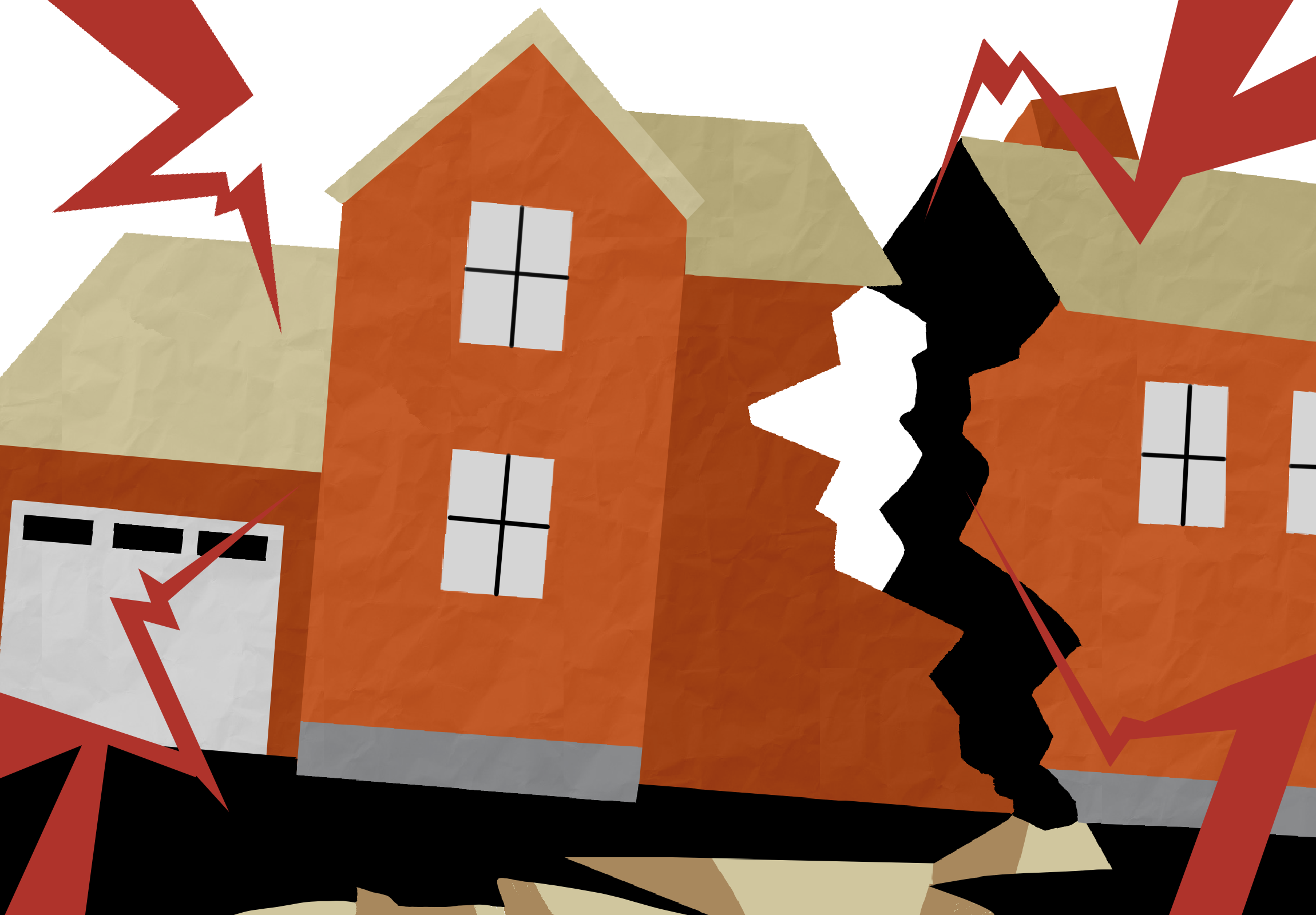
Earthquakes can destroy homes and leave people without a place to stay or the money to rebuild. Earthquake insurance covers the damage caused by earthquakes and living expenses for victims of earthquakes during rebuilding.
Earthquake insurance is a specialized policy designed to protect the homes and personal belongings of those affected by earthquakes, and living expenses from damage caused by earthquakes. The insurance includes the repairs or reconstruction of the main structure of the home including the foundation, walls, and garage.
Deepening the issue of destructive earthquakes, California is at an especially high risk for a large earthquake due to resting along the boundary between two huge tectonic plates: the Pacific Plate and the North American Plate. These plates are constantly moving against each other at different speeds. California is also home to more than 500 active faults, making it one of the most seismic zones in the world.
The most famous of these faults is the San Andreas fault, a roughly-800-mile fault that runs through much of the state and forms the primary boundary between the two plates. This makes California prone to earthquakes.
Earthquake magnitude measures the total energy released at the source of an earthquake. An earthquake with a magnitude of 6.7 struck Southern California on Jan. 17, 1994, causing the collapse of infrastructure such as freeways, taking around 60 lives, and resulting in over $20 billion in damage.
The expense of this earthquake was the catalyst for the creation of the California Earthquake Authority (CEA) later in 1996, since only half the cost of repairs from earthquake damages were able to be covered by insurance.
The catastrophic effects of earthquakes have created a need for a safety net for people affected by these disasters. Programs like earthquake insurance and the CEA have answered this call, aiding people in their times of need. And as the threat of earthquakes rises over time, reliance on these lifelines will only increase.