Story by Ella Apisakkul
Staff Writer
Photo by Sam Allen
Staff Photographer
When things seem too good to be true, they are bound to raise suspicion. Megachurches may be visually enticing, but repeated incidents of their hateful behavior and exploitative practices have sparked an abundance of critique. With the addition of Mosaic Los Angeles’s controversies, the question is brought to South Pasadena of who megachurches really aim to please: God or themselves.
Megachurches are defined as any church congregation with more than 2,000 weekly attendees. They often take place in stadium-size centers and host live contemporary worship bands alongside sermons utilizing expensive or absurdly large props. These are frequently funded by the pastors’ encouragement that by tithing large sums to the church, God will bring blessings upon the churchgoers, called the “Prosperity Gospel.”
However, megachurches are mainly characterized by their scandals, which repeatedly involve preaching against the LGBTQ+ community and abortion rights, as well as pushing attendees to donate money in the name of the church only for it to later be used for the pastors’ own desires.
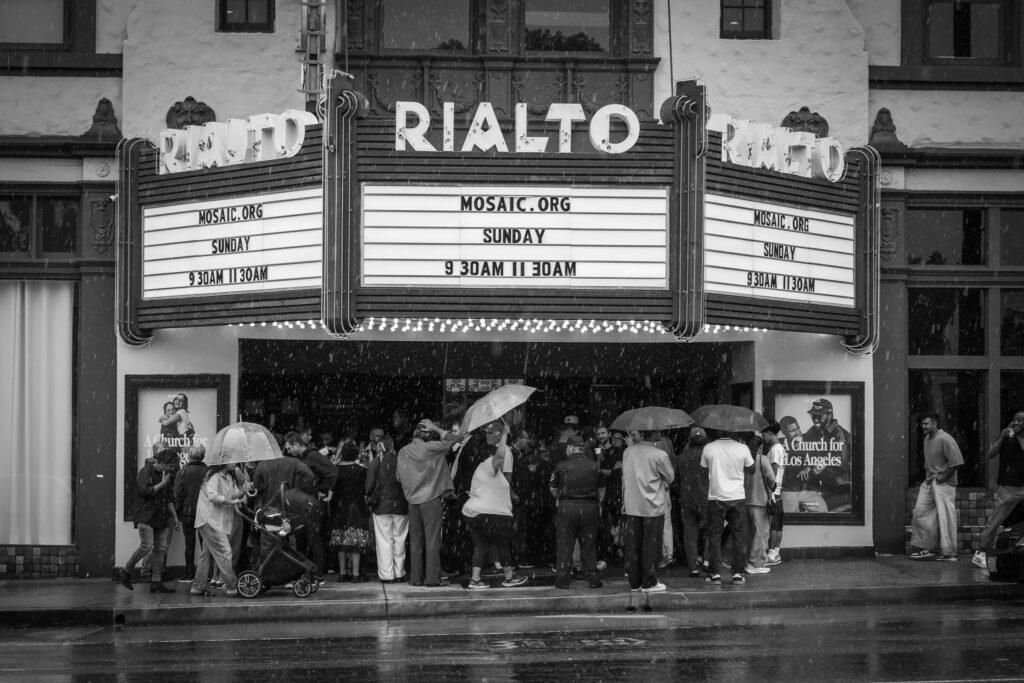
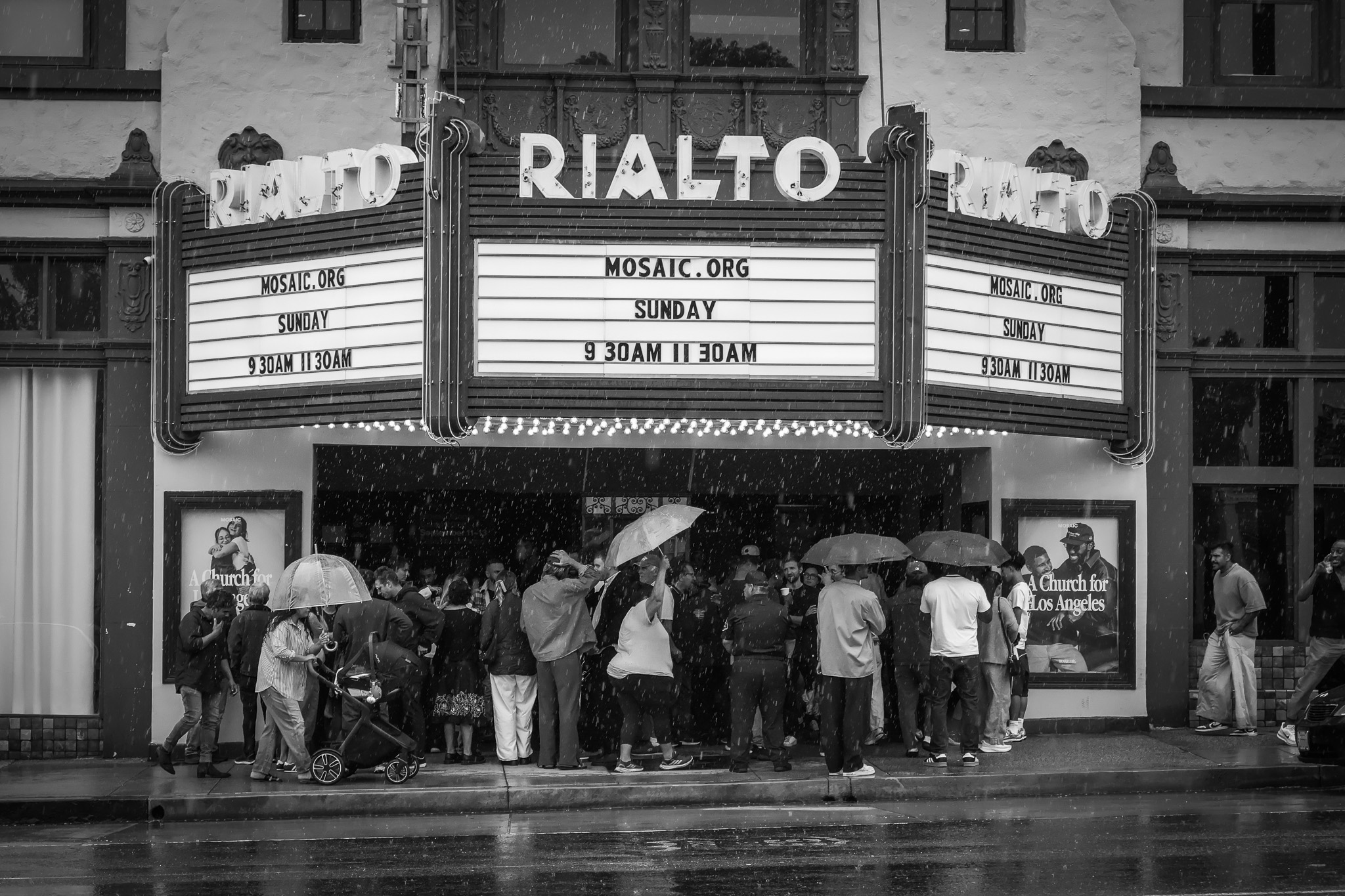
Mosaic is a megachurch whose several locations include one inside South Pasadena’s Rialto Theatre. This branch in particular has recently become the subject of controversy for its teachings that queerness is sinful, for forcing queer church members to out themselves, and for its persistent efforts to keep queer people out of church leadership. They have also been associated with the Southern Baptist Convention, a collection of churches known for opposing gay marriage and transgender identities. The South Pasadena location is listed as a convention member on its website.
“We believe the church exists to declare the name of Jesus and to build a place called home for the many who do not have one,” Mosaic’s website says under its section titled “What We Believe.”
Despite this, some former churchgoers said that they “found that the rhetoric of ‘don’t ask, don’t tell’ (referring to a policy that shames queer members of an organization if they are openly out, but is able to quietly ignore their sexualities if they are closeted) and ‘pray the gay away’ (referring to the idea that homosexuality is a sin, and that by practicing religion, queer people will be “freed” of their “homosexual tendencies”) were their true beliefs and that I could never move forward within the church or ever truly be welcomed or belong if I was pridefully out and unashamedly myself.”
“I am sick and saddened by cultures like this — which, if I may say, are the complete and utter opposite of the ‘Jesus’ they claim to serve. That is the point of the ‘good news,’ (referring to the idea that God loves humanity so much that He sent Jesus to save us) that we have always been enough. And always will be,” shares an anonymous former member of Mosaic Hollywood, a location that closed in mid-2025. It is ironic that these pastors would support both a man that treated everyone with mercy and that “no one who identifies as LGBTQ [is] allowed to be in volunteer staff, because they [are] actively choosing sin as a lifestyle,” said Emily Capshaw, who previously attended Mosaic Hollywood.
Megachurches may have larger crowds, live bands, and elaborate sermons, but they fail to serve and connect with churchgoers themselves. When a congregation grows too large, it is easy to view them as one big mass rather than the individuals within. Pastors are often found using the Prosperity Gospel to justify their mass amounts of wealth and expensive possessions, some even taking from poor church members to do so. As they preach, growing richer off of a crowd of listening ears sending “10 percent of [their] income” into their pockets, speaking of how God loves everyone while excluding people from that “everyone” as they see fit, the line is blurred as to whether these pastors serve God or themselves.
Some argue that megachurches keep religion alive, using their large budgets to fund different groups within the church, such as youth groups, family counseling, and live bands, as well as hosting engaging sermons and retreats. This motivates people to attend service more often, especially the younger generation who may have only one view of religion as extreme and intolerant, and are looking for something more relaxed.
Though these points do hold truth, it is important to note that megachurches are attempting to have their cake and eat it too. Younger people would be initially drawn to megachurches for their laid-back appearance, but likely would not stay after discovering their internal prejudice against certain groups and ideas.
Not all megachurches are built for the sake of taking money and promoting hate, yet to change that public perception, they must rethink their values. Wholly appealing to the newer generations through support of queerness, abortion rights, and more goes hand-in-hand with preaching true religion — they should both promote a culture of kindness, inside and out. Wanting to keep religion alive for future generations is not a bad thing, but that means that they must start from a place of willingness to support groups that they might not fully understand, as well as using their budgets not to fund the pastors’ material desires but towards real programs that would grow the church and its positive influence. When megachurches set their sights towards faith and kindness, and not on spectacle, greed, or exclusion to please their pastors’ pockets, they can begin to bring faith to more people on a wider scale.