
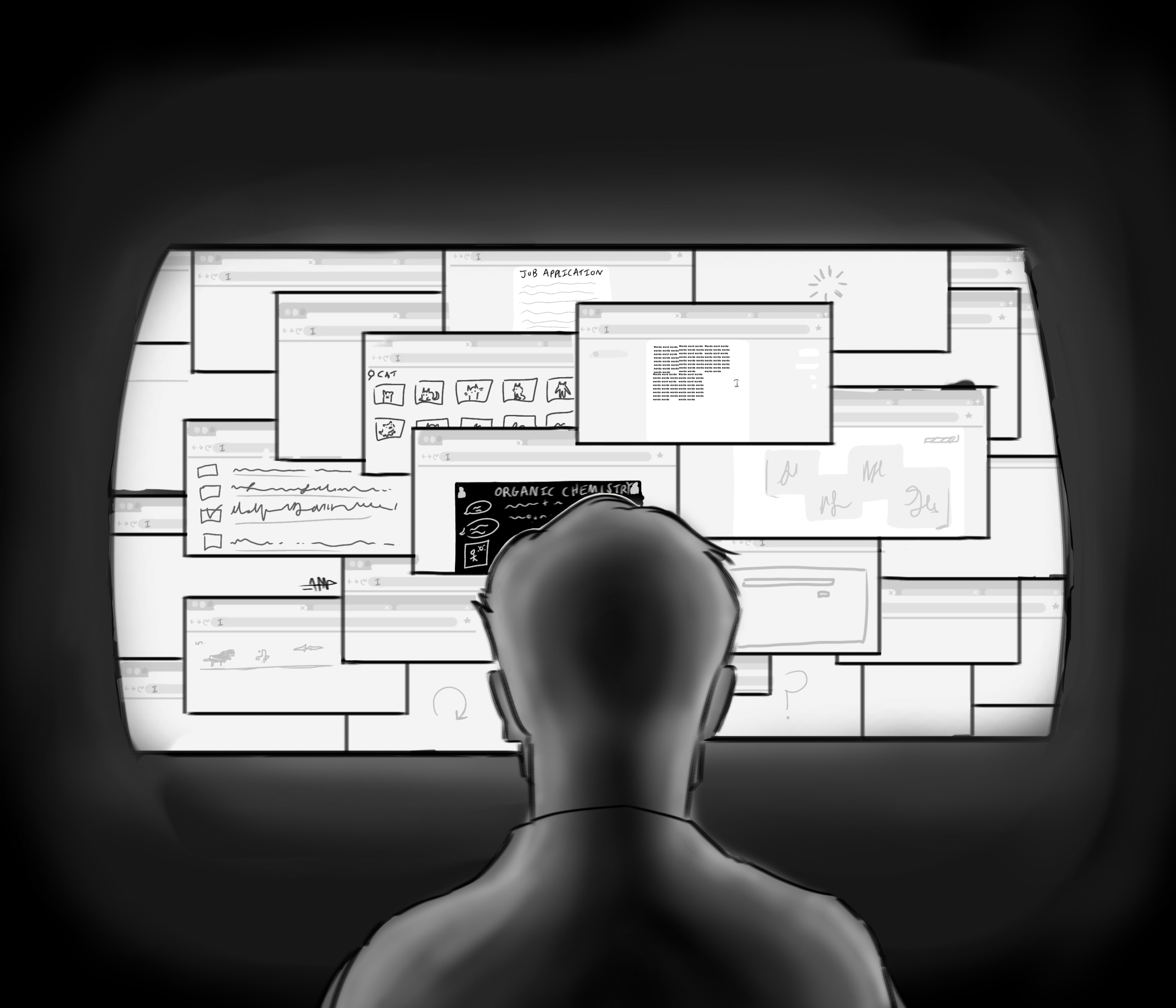
People must stop giving up too much information for the sake of convenience.
Story by Hung Gwan lau
Staff Writer
Illustration by Helena Millar
Staff Illustrator
Daily life is becoming more monitored and more recorded, At the same time, this is becoming increasingly normalized. Modern technology has made it possible for information and surveillance on people to be present in almost everything done. Smartphones actively track and store online information, school-issued Chromebooks are notorious for monitoring students, and social media encourages people to voluntarily share personal information for the world to view.
Chromebooks have been embroiled in controversy ever since the ability to track students’ online activity without the option to opt out. Schools do have legitimate reasons for this, such as protecting the students from profanity or inappropriate content and keeping them focused. However, the line is blurred when their focus goes from protecting students simply watching their every move. Students grow accustomed to knowing that their activity is constantly being watched by someone else, and may begin to see constant surveillance as a part of everyday life, which makes people complacent with a lack of privacy. People rarely stop to think about how much information they willingly give in exchange for convenience.
Newer technology is taking “recorded life” to an extreme, bringing more breaches of privacy into everyday life. Devices such as the Meta glasses allow users to record and photograph with little effort, whereas traditional cameras usually require much more input. With smart glasses, the ease of recording comes with just looking in a general direction and recording. Benefits of this technology include convenience, providing a hands-free experience because the glasses are worn on one’s head. It is much easier to document experiences, navigate information, and communicate without having to look down at your phone. The problem with these devices is the fact that someone might not know they are being recorded. With traditional devices, it is easy to tell when someone is pointing a camera at your face. Smart glasses completely remove the noticeability and can change recording from a deliberate action to something anyone can do at any moment.
Social media bridges the gap from non-consensual surveillance to voluntary sharing. Someone posting a photo of themselves is not the same thing as a company secretly collecting information through their camera roll. But when people become accustomed to daily surveillance through our devices, it may start to turn the thought of privacy into a looser term. Younger generations being raised with these devices may feel completely indifferent to their information being stored digitally. Being comfortable with sharing personal information should not be normalized, but is actively being pushed upon students.
There are genuine reasons why being recorded and monitored might be a benefit. Location tracking, monitoring, and cameras can all be used to help protect our society when humans cannot. However, recognizing these benefits does not mean it should be accepted.
The solution is not as easy as completely eliminating technology or surveillance. We should be more aware of the information we are willingly giving away and how it is being used. People should also have more control over their own information. Technology can make life easier and safer, but privacy should not be the price to pay for it.