
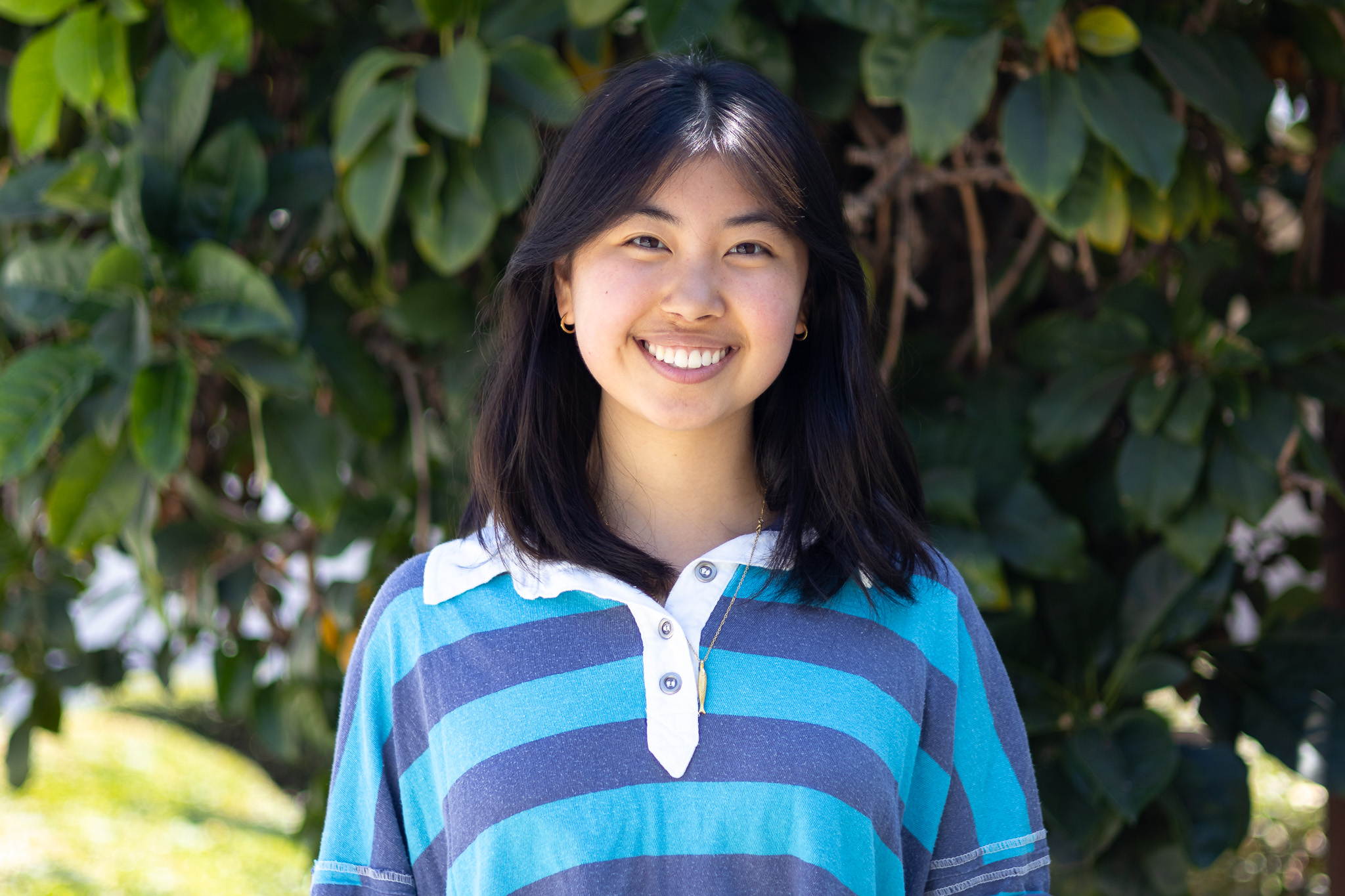
Story by Zoe Chen
Editor-in-Chief
One of the colleges I’m applying to recommends submitting an academic paper I’ve written as a school assignment. It should be something I’ve written in the past year, and it should demonstrate my best writing ability. Ideally, the college says, it’s analytical writing, rather than a personal narrative.
I’ll submit the application in January, which gives me the interval from January 2026 to now from which to select my writing sample. I filed through this and last year’s Google Classrooms looking for candidates, prepared to make a preliminary list of pieces I liked before cutting it down from there.
I found 10 timed writes, though I don’t feel something I’ve written in 40 minutes can carry the weight of “best writing ability.” I found no untimed essays from this semester and only two from last, one of which was a narrative and thus out of contention. Consequently, my list of writing candidates contained only one option. I mentioned this to a friend, who is also a senior, and she said she hadn’t written an essay outside of class, narrative or otherwise, since sophomore year.
Research has shown that as AI advances and as its use becomes more widespread, the average student’s writing proficiency declines. The underlying assumption seems to be that writing ability is degrading as a result of students using AI as a crutch. The studies are expectedly more nuanced than that, but their essence implies, at least in my interpretation, that if those students didn’t rely on chatbots, the overall average student would write as well as their pre-AI elders.
I don’t believe the average is brought down solely by the select cohort of students who rely on AI. Plenty more simply do not have the stimuli to write and revise their work anymore.
In freshman year, all but one essay I wrote was produced over multiple weeks and underwent multiple rounds of editing and revisions. Sophomore year was largely the same. By junior and senior year, assignments transitioned to in-class and timed responses, which is partly just the nature of AP classes, but even so, assignments that had been at-home the previous year were substituted to be handwritten in class. At the same time, as I progressed through the newspaper’s editor ranks, my writing workload decreased. For some months, I did not write a single story.
The college application process has been eye opening for me in plenty of ways, but one I didn’t expect was how foreign it now feels to stick with a piece of writing for weeks on end, rereading it every few days looking for ways to polish it. I’m not used to having the luxury of taking more than 20 minutes to outline an essay, and even now when I do have that time, I don’t think I take advantage of it as much as I should.
This is not to say that it is a teacher’s responsibility to assign more at-home, weeklong essays that some students will presumably cheat on with generative AI. I do realize that a teacher’s best AI prevention method may well be handing students a pen and paper as they walk into the classroom and setting the timer.
What I mean to say is I didn’t realize how little I was writing and revisiting my work, and I wish I had written more for my own benefit, even when my classes didn’t mandate it. I do feel that my writing ability has declined; not because I’m reliant on AI to write, but because writing is not a skill I thought to practice when the at-home essay assignments began dropping away.
It was only this year that I began consistently writing columns for this newspaper. In September, I stared at my words in the Google Doc, aware that I needed to revise them but somewhat unsure how to do so. October was a little easier, and this piece for November has felt the most natural to date. It’s comforting to know that it’s not too late to improve.