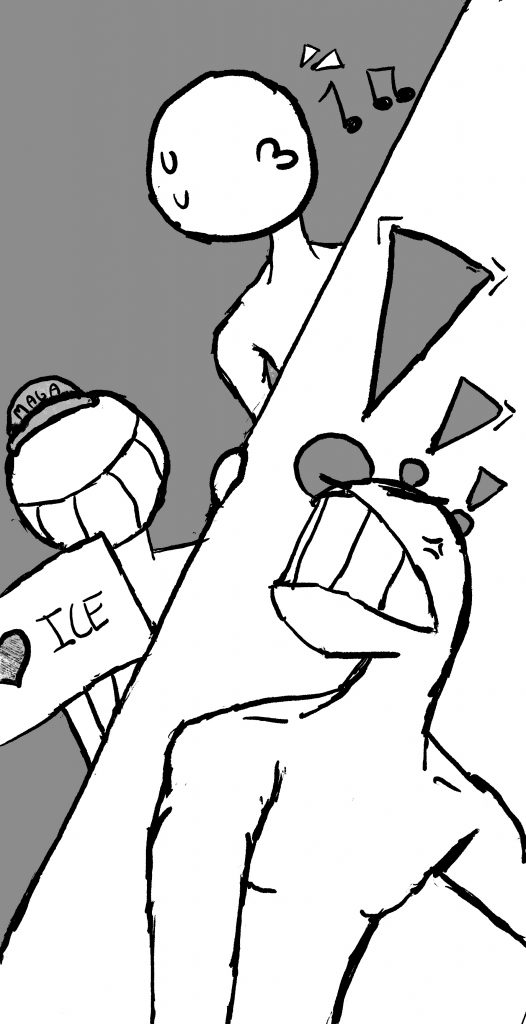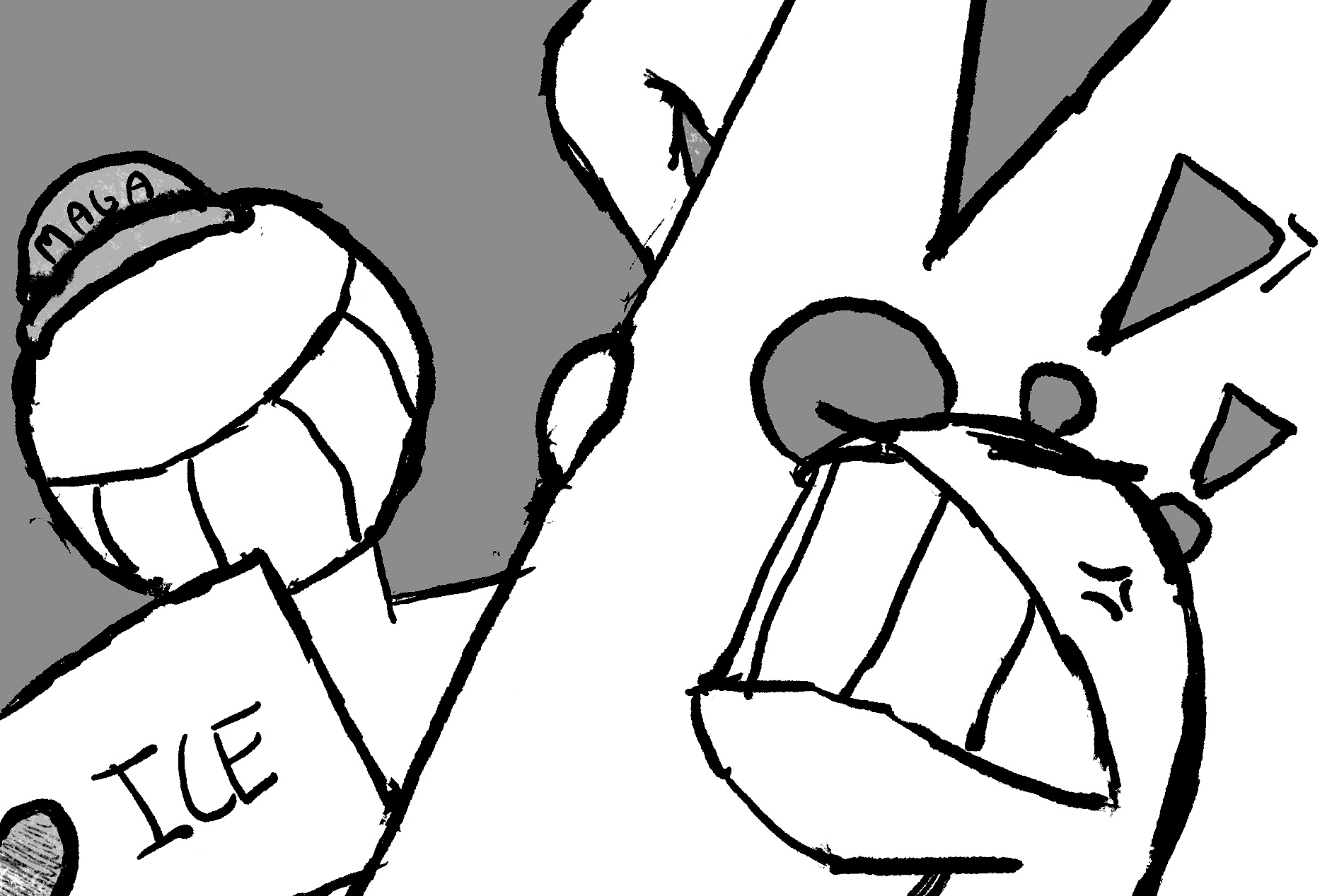
Tiger examines whether one can be friends with someone they fundamentally disagree with.
Illustration by Owen Hou
When there is no respect, there is also no friendship
Disagreements make more
meaningful friendships
Story by Leighton Kwok
“We can disagree and still be friends,” is a mature ideal that creates open conversation and the type of empathy that humans use in daily life. In many different situations, it is true. One can be friends with someone who likes different music, has a different favorite TV show, prefers salty over sweet, or attends a rival school. These contrasts can even make a friendship better and push one to consider other perspectives that are otherwise ignored. However, there is a line that is not often mentioned. This limit is not about the beliefs themselves, but about the effects those beliefs have in the world.
While most disagreements end with the conversation, some have real-world implications that remain long after. These disagreements can turn into actions and real-world consequences that can put people into real danger, and when this happens, the nature of the disagreement drastically changes. When positions strip away someone’s existence or make them less safe in their daily life, that person is not advocating for a belief or a moral, but rather promoting harm and disrespect.
Talking to make a perspective heard is one thing, but taking actions to impede on someone else’s safety and humanity is another. While the individual holding the beliefs may be kind on a personal level, the message that they may share is not just a “differing opinion,” but rather an advocacy for harm.
Admittedly, ending relationships, both platonically and romantically, is difficult and requires making a judgment about individual personal comfort. But the alternative, pretending that all beliefs are equally harmless, creates a dishonest relationship that is troubling for both parties.
People can disagree and still be friends, but only when those disagreements do not translate into active threats to safety, dignity, and existence. When a relationship like that is broken, it is not by an inability to handle different perspectives, but by the recognition that some beliefs, once acted upon, make a meaningful relationship impossible.
Story by Sebastian Gutierrez
When politics and identity overlap, a disagreement can quickly become personal. Respect is often interpreted as agreeing, but that is not true. Respect is not approval; it is the minimum standard for how to treat one another, including those who disagree with that exact statement.
Respect does not mean agreeing with or platforming someone’s radical or inhumane beliefs. It is possible to condemn someone’s belief and still treat them with respect, even if that disagreement is on something as important as human rights. Without respectful disagreement, cutting people off becomes easier than talking through the differences. Especially on social media, outrage is rewarded and pushes people more towards radical thinking.
What people mean by “human rights” as two different definitions will often directly contradict each other. For some, rights are legally protected by courts and the constitution. Others feel rights are a moral claim about safety and equality. While others may base rights off their human rights within religious beliefs. Everyone agrees these rights are important, though they often disagree on key aspects like immigration, trans rights, and women’s rights.
Dehumanization is contagious; once someone is labeled as “less than” due to their beliefs, it opens them up to threats, harassment, or worse. This logic now continues to spread dehumanization and goes directly against the concept of human rights. If human rights are the goal, respect should be attempted alongside it for all people.
Respect is also strategic. Nobody rethinks their views due to threats, harassment or humiliation. People change through respectful questioning or challenging of beliefs, which is heavily lacking in the current political climate.
Being afraid to normalize inhumane ideologies is a genuine concern, but a lack of respect hardens both parties’ beliefs and makes conversation impossible. Being respectful does not mean you must ignore their harmful words or actions. Being respectful does not mean tolerating everything. One can keep their mind open to civil conversation and set firm boundaries against real harm.